
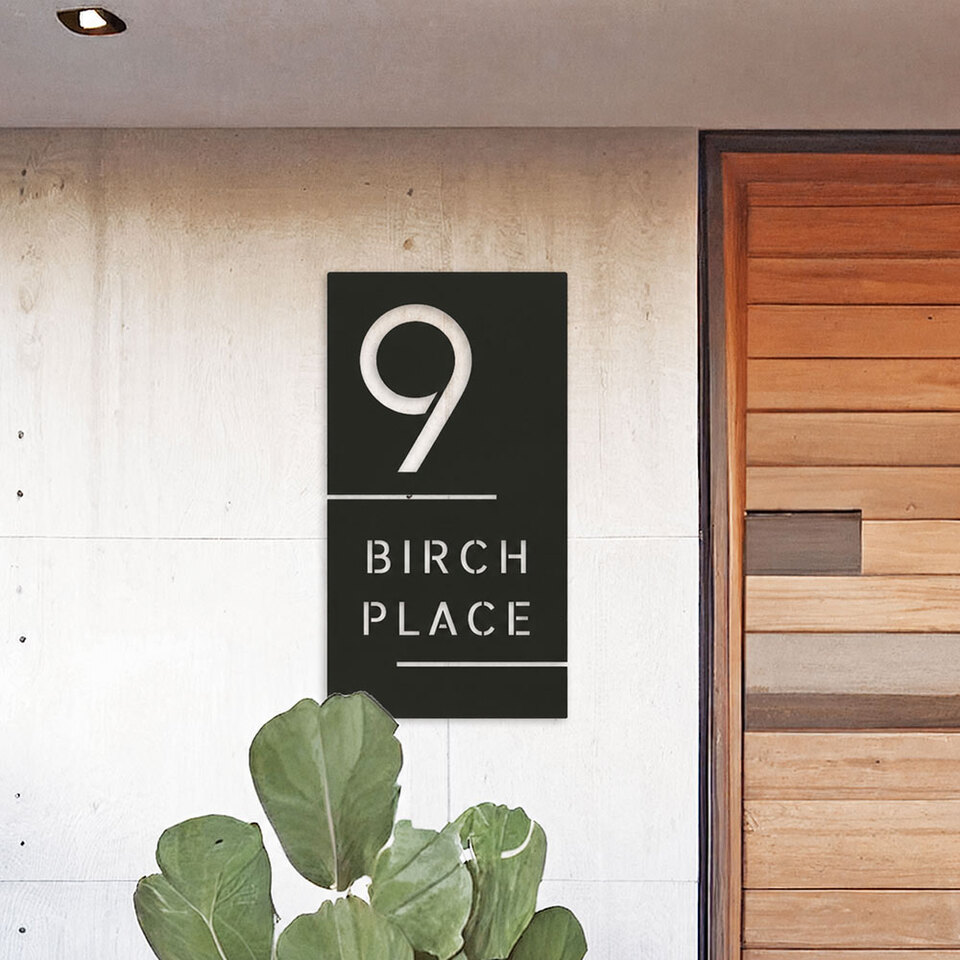
House Number Signs
House Number Signs for New Builds in New Zealand: What to Know Before You Order
A new build is your chance to get the signage right from day one. Here is what to consider before you order.
New builds across New Zealand are going up fast, particularly in Auckland, Hamilton, and Christchurch. But house number signage is often an afterthought - left until after move-in, chosen in a hurry, or simply handed over to the builder to sort. Getting it right from the start saves time and looks far better on the finished home.
Why new builds deserve more thought on signage
New subdivisions often share very similar exteriors. Fences, letterboxes, and driveways tend to look alike along an entire street, which means your house number sign does more work than it would on an older established home with distinctive character.
It also needs to work practically. Courier drivers, emergency services, and visitors are navigating roads where every property looks almost identical. A clear, well-placed, correctly sized sign makes your home easy to find quickly.
Similar exteriors
In new subdivisions, properties often look alike - clear signage sets your entrance apart.
Unfamiliar streets
New subdivision roads are not always on maps yet, making visible numbering even more important.
Emergency access
Emergency services need to find your property fast. Good signage matters beyond just convenience.
Oversized numbers - why bigger is better
The most common mistake with house number signage on new builds is choosing something too small. A number that looks substantial on a screen can disappear completely once installed on a full-scale fence or wall, especially from a moving vehicle.
Calla Concepts only sells oversized house numbers - ranging from 600mm to 1.5m high. This is a deliberate choice. Numbers at this scale are genuinely visible from the street, create a strong design statement at the entrance, and suit the scale of modern NZ homes and fencing.
What feels large up close looks balanced and proportionate once installed. A 600mm number on a standard timber fence reads perfectly from the road. A 1.5m number on a large rendered wall or gate pillar makes an entrance that is impossible to miss.
Calla Concepts tip: Hold a piece of paper cut to your chosen number height against your fence or wall before ordering. It is the quickest way to check scale before committing.
ACM - the material built for NZ conditions
All Calla Concepts house number signs are made from ACM - Aluminium Composite Material. ACM is a commercial-grade exterior material used widely across the NZ building and signage industry. It is rigid, weather-resistant, and performs consistently in all conditions including coastal environments, high UV exposure, and wet winters.
Unlike acrylic, ACM does not flex or warp in heat and handles wind loading well at larger sizes. For oversized numbers up to 1.5m, ACM is the right material - it keeps its shape and finish for years without maintenance.
Rigid and durable
ACM does not flex or warp. Holds its shape at any size from 600mm to 1.5m.
All-weather performance
Handles coastal salt air, high UV, and wet NZ winters without degrading.
Low maintenance
No painting, sealing, or upkeep required. Clean occasionally with water and a soft cloth.
Black or white - which suits your new build?
Both black and white are available across the full range. The right choice comes down to your exterior finish and the contrast you need.
Most new builds in New Zealand lean toward light exterior palettes - white render, pale grey cladding, or light timber fencing. Against these finishes, black numbers create the strongest contrast and the clearest street visibility.
White numbers work well on darker cladding, charcoal fences, black gate pillars, and dark feature walls. If your exterior mixes light and dark elements, black is generally the more versatile default and the most popular choice.
Calla Concepts tip: If your fence or wall is a mid-tone grey, black numbers will almost always give better contrast than white. When in doubt, go black.
Mounting options for new build surfaces
New builds often have surfaces that standard fixings were not designed for - smooth render, polished concrete, aluminium cladding, or tiled feature walls. Calla Concepts numbers come with two fixing options to cover most situations.
Screw holes are drilled through the number so it sits flat against the surface. This suits timber fences, weatherboard, brick, and most standard fence post installations.
Standoff wall mounts lift the number slightly off the surface, creating a shadow and a floating effect that suits rendered, tiled, and smooth cladding surfaces. Mounts are available in black or satin silver and come with screws included - no separate hardware trip required.
Quick surface guide
Timber or weatherboard - screw holes. Rendered or tiled walls - standoff mounts in black or satin silver. Smooth flat cladding - either option works. For large numbers at 1m or above, standoff mounts are recommended for a cleaner finish and better load distribution.
Number only or full address sign?
Stand-alone oversized numbers work well on most new builds. But for properties in subdivisions where street names are new and not yet well known, adding the street name removes any ambiguity for visitors, couriers, and emergency services arriving for the first time.
Full address signs are becoming the standard for new builds because they do two jobs at once - number visibility and street identification - in a single clean format that suits modern NZ home exteriors.
Calla Concepts tip: If your street is new and not yet showing correctly in Google Maps or delivery apps, including the street name on your sign is especially useful in the first year or two after moving in.
Council requirements for new builds in NZ
Most standard residential house number signs do not require resource consent in New Zealand. However, local councils do have addressing policies that require your number to be visible from the road, positioned at the entrance to your property, and maintained in a legible condition.
Auckland Council requires that all residential and rural properties display their address number clearly at the property entrance. Similar requirements apply under most other territorial authority policies across the country.
The practical takeaway: place your sign at or near the boundary, facing the road, at a height visible from a passing vehicle. Oversized ACM numbers at 600mm and above satisfy this requirement easily in almost all cases.
Ready to sign off your new build?
Browse oversized ACM house number signs in black and white - from 600mm to 1.5m high - with standoff mounts in black or satin silver included. Shipped across New Zealand.
Shop House Number SignsFrequently asked questions
What size house numbers do you sell for new builds in New Zealand?
Calla Concepts sells oversized house numbers from 600mm to 1.5m high, made from commercial-grade ACM. These large-format numbers are designed to be clearly visible from the street and suit new builds, lifestyle blocks, and any property where visibility is the priority.
What material are the house number signs made from?
All Calla Concepts house number signs are made from ACM - Aluminium Composite Material. ACM is a commercial-grade, weather-resistant material used widely in exterior signage across New Zealand. It is rigid, durable, and performs well in all conditions including coastal and rural environments.
How are the house numbers attached to a wall or fence?
Numbers can be installed using screw holes or standoff wall mounts. Mounts are available in black or satin silver and come with screws included. Standoff mounts suit rendered and tiled surfaces on new builds. Screw holes suit timber fences and weatherboard cladding.
Should I use individual numbers or a full address sign for a new build?
Both work. Oversized individual numbers suit most new builds. Full address signs with the street name are popular for subdivision homes where the road is new and less familiar to couriers and visitors.
Do I need council approval for a house number sign on a new build in NZ?
Most standard residential house number signs do not require resource consent. However your local council will have visibility and placement requirements under their addressing policy. Place your sign at the boundary, facing the road, at a height visible from a passing vehicle to satisfy most NZ council requirements.